Skinhug team


We reviewed Skinhug’s ingredient list using popular skincare ingredient analyzers like INCI Decoder, CosDNA, and SkinCarisma. Here’s what the results say about fragrance, essential oils, antioxidants, and formula simplicity.
We ran Skinhug Pure Green Nourishing Seed Oil through three popular skincare ingredient-analysis tools: INCI Decoder, CosDNA, and SkinCarisma.
The overall picture came back very close to what we designed Skinhug to be from the beginning: a short, fragrance-free, essential oil-free, alcohol-free oil blend made for simple baby, mama, and family skincare.
These tools are useful for transparency, not for making medical claims. They help decode what is inside a formula, but they do not replace patch testing, Thai FDA notification, or professional advice for very sensitive, reactive, or medically treated skin.
When we created Skinhug, we wanted the formula to feel easy to understand.
Not just soft in the copy.
Not just pretty on the bottle.
Actually easy to understand when someone flips it over and reads the ingredient list.
Because if you are putting something on baby skin, your own skin, or the skin of someone you love, it should not feel mysterious.
That is why we wanted to see how Skinhug reads through the same ingredient-analysis tools that many skincare lovers, careful shoppers, and label-reading parents already use.
Not because those tools are perfect.
Not because they can tell the whole story.
But because they give another layer of transparency.
Ingredient analyzers are good at showing how a formula looks from an ingredient-checking point of view.
They can help surface things like:
What they cannot do is guarantee how every person’s skin will react.
They are not pediatric approval.
They are not medical certification.
They are not a replacement for patch testing.
And they are not the same as regulatory review.
So we see them as helpful tools for understanding a formula, not as final judges.
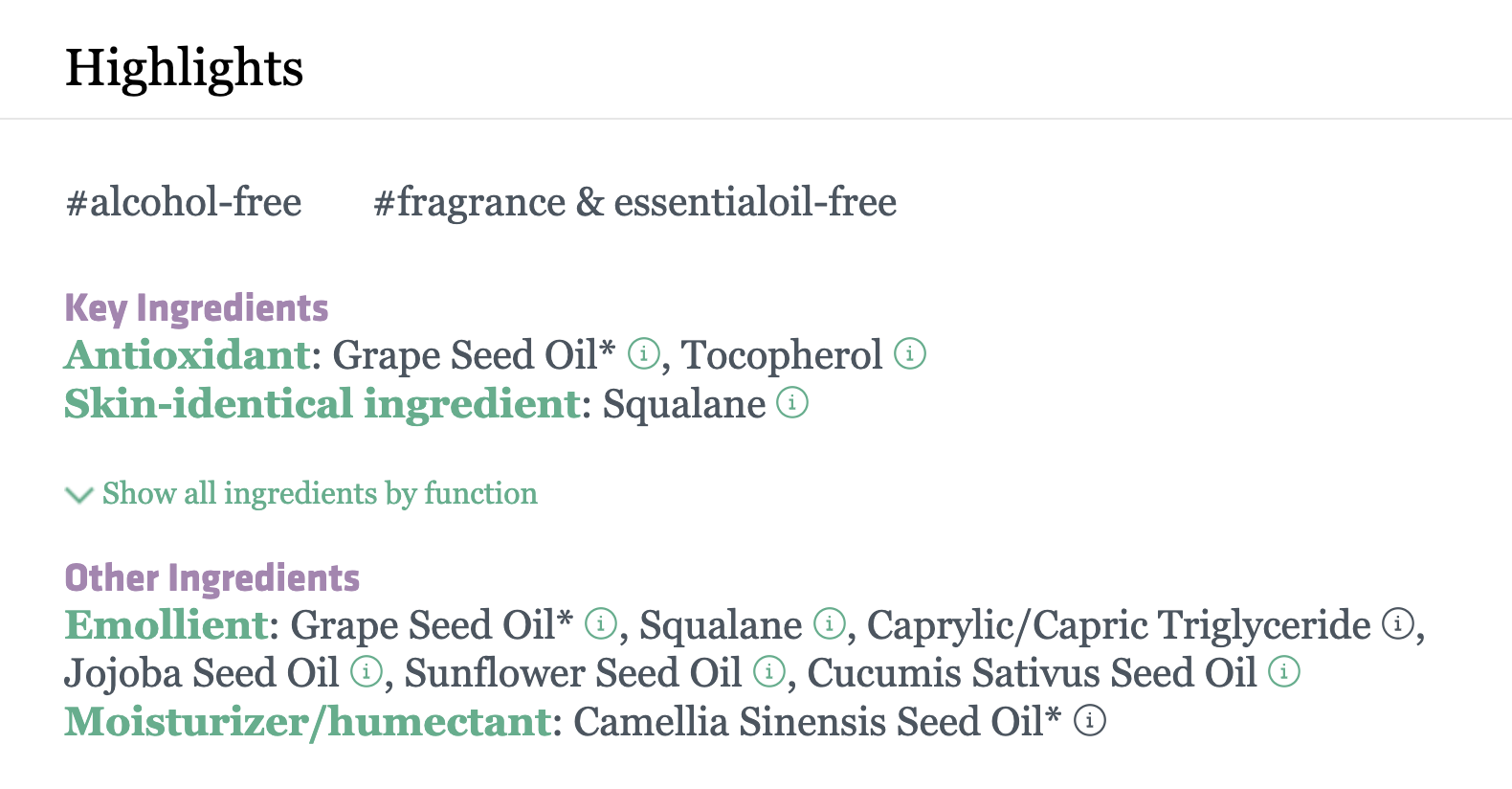
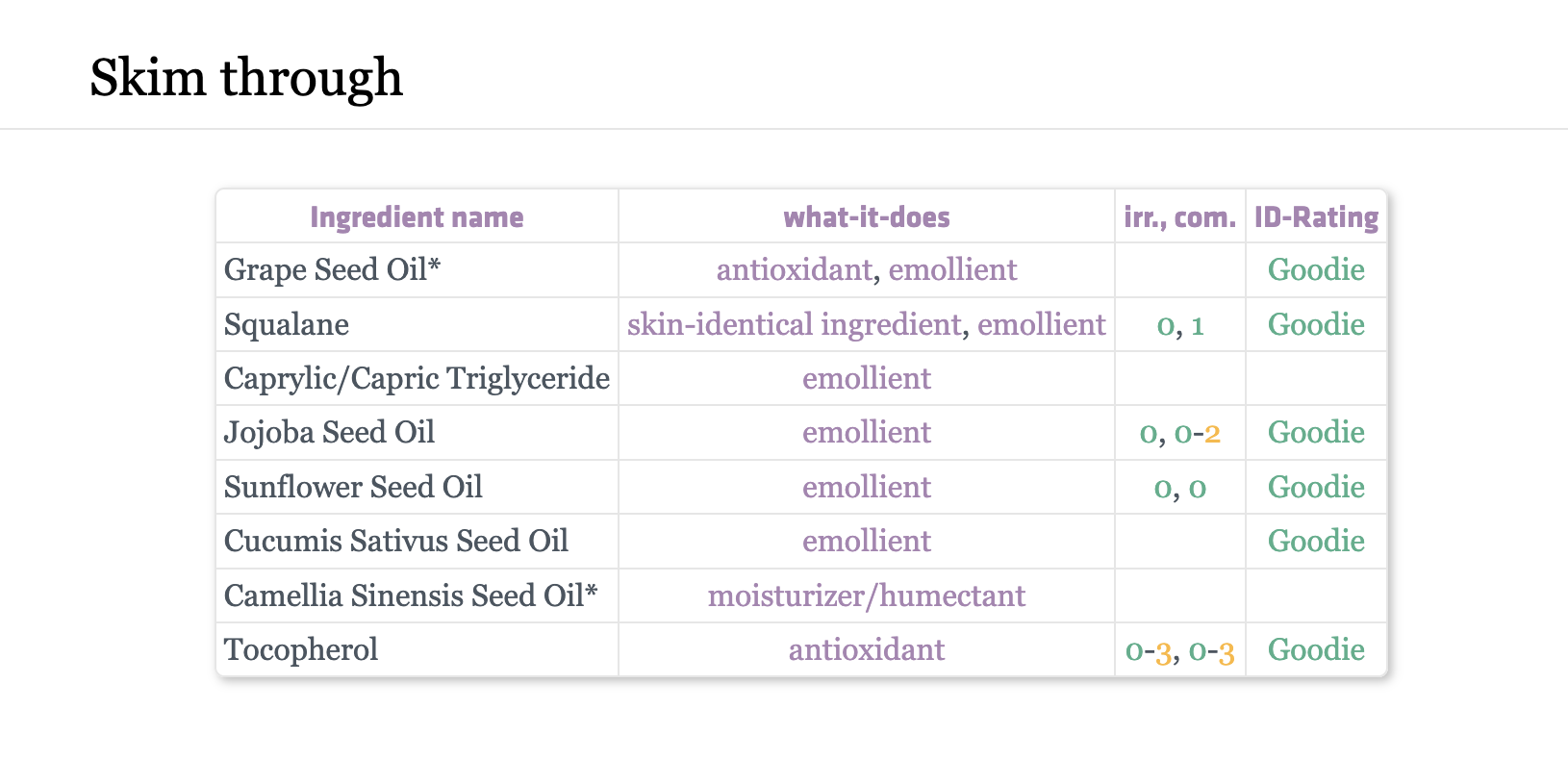
INCI Decoder gave Skinhug a very clean read.
It flagged the formula as:
Those two highlights matter a lot because they align exactly with one of Skinhug’s clearest choices from the start. We wanted a formula without added scent and without extra noise.
It also highlighted:
That squalane callout is especially nice because it supports the kind of skin feel we wanted. Something soft, comfortable, and elegant, without feeling heavy or greasy.
INCI Decoder also marked many of the ingredients as Goodie, which is its positive shorthand for ingredients it views favorably in skincare. That included grape seed oil, squalane, jojoba seed oil, sunflower seed oil, cucumber seed oil, and tocopherol.
The ingredient descriptions also matched the overall feeling of the formula well:
Overall, INCI Decoder read Skinhug as a simple, fragrance-free oil blend with supportive, skin-friendly ingredients and very little clutter.
A couple of ingredients showed rating ranges.
Jojoba Seed Oil showed comedogenicity at 0 to 2.
Tocopherol showed irritancy and comedogenicity at 0 to 3.
This is exactly the kind of thing that sounds scarier than it really is if you read it without context.
Rating ranges usually mean the data is not absolute. Different studies, ingredient sources, or database methods can produce slightly different scoring. It does not mean the ingredient is automatically a problem, and it definitely does not mean the finished formula will behave badly on everyone’s skin.
So for us, these numbers are useful as general guidance, but not something we would overinterpret.
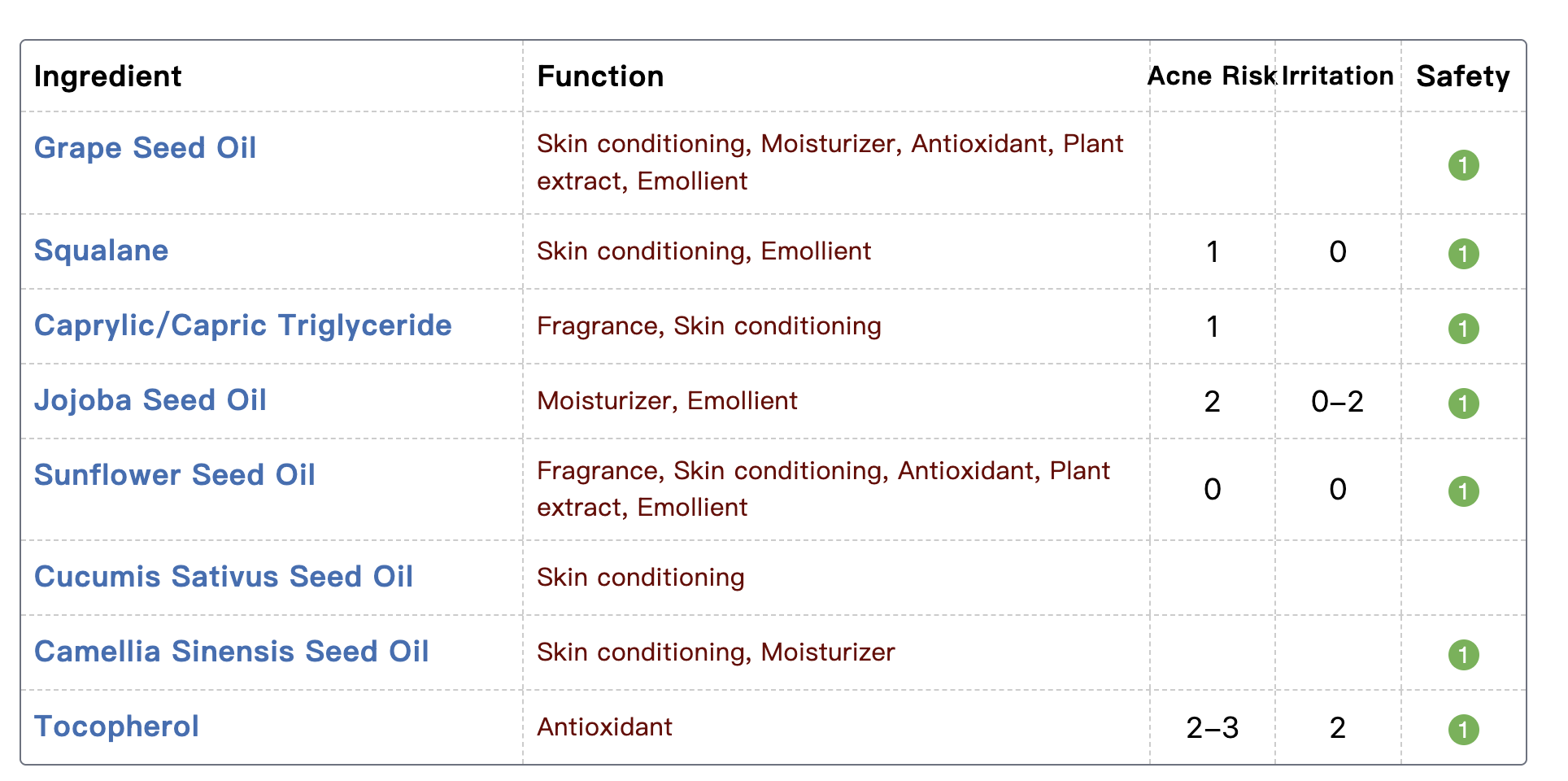
CosDNA gave another useful angle.
The strongest headline there is that every ingredient shown in the formula came through with a Safety score of 1, which is the best result on their scale.
That gave us a very calm overall picture of the formula.
CosDNA also listed ingredient functions such as:
A couple of database quirks are worth noting.
CosDNA listed Caprylic/Capric Triglyceride and Sunflower Seed Oil under fragrance-related function language. In practice, those are not fragrance ingredients in the way parents usually mean when they ask if a product is fragranced. CCT is widely used for texture and skin feel, and sunflower seed oil is a straightforward emollient plant oil. So this looks more like a database labeling issue than a meaningful formula concern.
CosDNA also gave:
Again, this does not mean the formula is problematic. It just means database-style acne and irritation scoring can be broad, and those numbers do not replace real-world skin context or the way a finished formula actually behaves.
The biggest takeaway from CosDNA is still the simplest one: the formula came through with a very clean overall safety profile.

SkinCarisma gave the broadest checklist-style result of the three.
It identified the formula as:
The only one not checked was oil-free, which is exactly what you would expect from an oil product and not a concern at all.
SkinCarisma also highlighted Squalane as the key active, with the note that it hydrates and mimics skin lipids. That is a strong summary of one of Skinhug’s most elegant ingredients.
It also reflected the ingredient list clearly as:
grape seed oil, squalane, caprylic capric triglyceride, jojoba seed oil, sunflower seed oil, cucumis sativus seed oil, camellia sinensis seed oil, and tocopherol.
This result was especially nice because it showed the formula reading clearly from a modern skincare-checking perspective, not just a baby-care one.
The biggest thing all three tools seem to agree on is that Skinhug reads as a short, quiet, uncomplicated formula.
Not overloaded.
Not perfume-led.
Not built around harsh extras.
Across the three tools, the clearest repeated signals were:
That consistency matters more to us than any one badge or one score.
Because if a formula is truly simple, it should still look simple when viewed through different lenses.
Honestly, it says the formula is reading the way we hoped it would.
Skinhug was never meant to be the loudest product in the room.
We wanted it to feel:
We wanted a bottle that could be used after baby’s bath, on a growing belly, or on dry-feeling skin, without a long list of extra things getting in the way.
That is why these results feel meaningful to us.
Not because they prove perfection.
But because they show consistency.
And consistency builds trust.
Skinhug Pure Green Nourishing Seed Oil is a fragrance-free, plant-based family oil made for:
It is made without added fragrance or essential oils, and the analyzer results support that part of the formula story clearly.
At the same time, we want to keep the language responsible.
These tools help explain the formula.
They do not certify it as universally safe for every baby or every skin type.
That is why we still believe in patch testing, common sense, and asking a pediatrician or doctor when skin is very sensitive or medically complicated.
Even with a short and simple formula, skin is still personal.
For newborns, very sensitive skin, eczema-prone skin, skin with active irritation, or medically treated skin, start with a small amount first and patch test before wider use.
If you are unsure, it is always okay to check with your pediatrician or doctor.
We checked Skinhug through ingredient analyzers for the same reason many parents use them in the first place.
Because understanding what is inside matters.
And if a formula is truly simple, it should still look simple when you hold it up to the light from different angles.
That is what we wanted to see.
Not a flashy claim.
Not a perfect score story.
Just a formula that keeps telling the same quiet truth.
And thankfully, that is what we found.
No. INCI Decoder is a helpful ingredient-analysis tool, but it is not a medical approval or pediatric safety certification. Parents should still patch test first and check with a professional if needed.
Yes. Skinhug is made without added fragrance or essential oils, and the analyzer tools reflected that clearly.
Yes. INCI Decoder and SkinCarisma both reflected the formula as alcohol-free.
Ingredient-rating ranges can vary depending on the study, ingredient source, refinement level, or database method. They are better read as general guidance, not a final verdict.
That appears to be a database function-label issue, not evidence that the formula contains added perfume. For example, caprylic/capric triglyceride and sunflower seed oil are not used in Skinhug as fragrance ingredients.
No. Ingredient analyzers can help explain a formula, but every baby’s skin is different. Patch testing and professional advice still matter.

Now available on Shopee, Thaimart, Tiktok and LINE