Skinhug team

Learn what cradle cap is, why babies get it, whether you need to remove it, and how gentle oil, shampooing, and soft brushing can help soften baby scalp flakes safely.
Cradle cap is a common baby scalp condition that causes flaky, waxy, or yellowish scales on the scalp. It is usually harmless and often improves on its own, but some parents gently soften the flakes with a small amount of oil before shampooing and brushing with a soft baby brush. Skinhug is not a cradle cap treatment, but it can fit into a gentle softening routine because it is fragrance-free, essential oil-free, and made for baby and family skin.
That is the short answer.
Now for the calmer, fuller version.
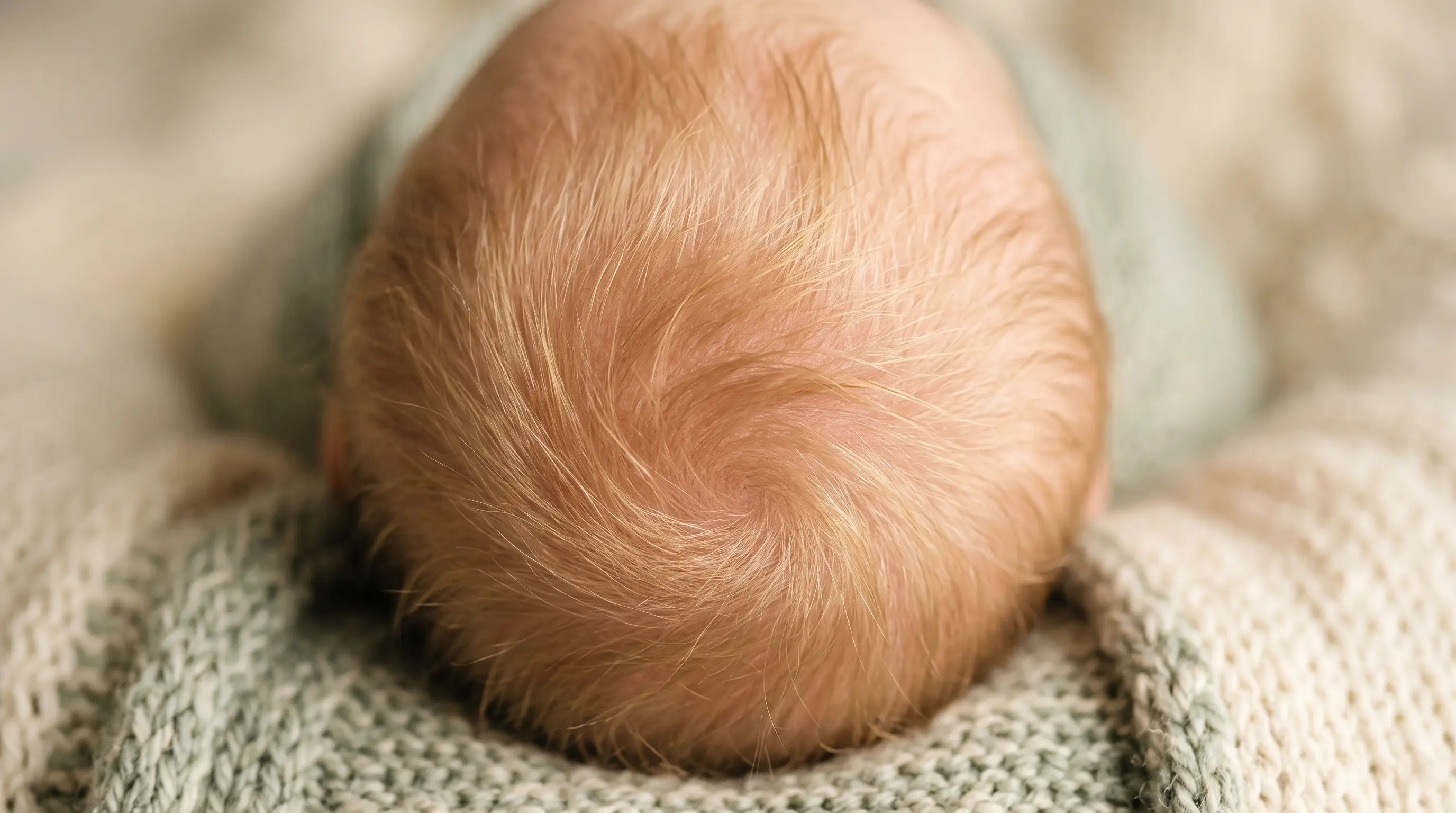
Cradle cap is also called infant seborrheic dermatitis. It usually shows up as greasy, waxy, yellow, white, or flaky scales on a baby’s scalp. It can look dramatic, especially the first time you see it, but it is usually harmless and very common in babies. HealthyChildren.org describes cradle cap as a common skin condition in babies, and Mayo Clinic notes that it often clears up on its own within weeks or months.
It is also not caused by poor hygiene. That part matters, because many parents blame themselves the second they see it. HealthyChildren.org says cradle cap is not caused by poor hygiene.
The exact cause is not fully understood. HealthyChildren.org says one theory is that it may be linked to a reaction to common yeast on the skin, and another is that hormones from the mother may cause the baby’s oil glands to overproduce.
The important part for parents is this: it is common, and it is not your fault.
Not always.
If it is mild and your baby seems completely comfortable, you may not need to do much at all. Cradle cap often improves over time on its own.
If the flakes are thicker, more stuck on, or just getting in the way during washing, many parents choose to gently soften them and let them loosen gradually.
That is the key idea here.
The goal is not to aggressively remove cradle cap. The goal is to soften the flakes so they can loosen slowly and gently.
This part matters just as much as what to do.
Do not scratch it.
Do not pick flakes off dry.
Do not use harsh scrubs.
Do not use adult dandruff shampoo unless your doctor recommends it.
Do not use essential oils on a baby’s scalp without medical guidance.
Do not leave heavy oil sitting on the scalp for too long without washing it out.
Mayo Clinic says not to scratch cradle cap, and notes that leaving oil in the scalp can make cradle cap worse. HealthyChildren.org also says to use a mild baby shampoo and check with your pediatrician before using medicated shampoos.
If you want to try a gentle softening routine, this is the general idea:
Mayo Clinic says a few drops of mineral oil or petroleum jelly may be rubbed onto the scalp to loosen the scales, then brushed and shampooed out, and warns that leaving oil in can make cradle cap worse. Mayo’s seborrheic dermatitis guidance also says to wash with a mild baby shampoo and gently loosen scales with a cloth or infant hairbrush, adding oil first if needed.
Yes, oil is commonly used to help soften stuck-on flakes before washing.
Mayo Clinic specifically says a few drops of mineral oil or petroleum jelly can help loosen the scales before brushing and shampooing. That does not mean oil treats cradle cap. It means oil can help soften buildup so it is easier to wash away gently.
That is a useful distinction.
Oil can help with the softening step.
It is not a cure.
Skinhug is not a cradle cap treatment, and it does not treat, cure, or prevent any medical skin condition.
But if you are looking for a gentle oil to help soften dry-looking scalp flakes before bath time, Skinhug can fit into that kind of routine.
Skinhug Pure Green Nourishing Seed Oil is made without added fragrance, essential oils, or mineral oil, and is made for baby, mama, and family skin. For cradle cap softening, use only a tiny amount on the flaky area, let it soften briefly, then shampoo and rinse well. Do not leave oil sitting on the scalp for long periods, and do not use it on red, broken, oozing, or infected-looking skin.
Check with your pediatrician if:
Mayo Clinic says to get medical advice if cradle cap does not stop or seems serious, and if patches are not going away, the scalp looks more inflamed, or new patches show up on other parts of the body.
Cradle cap can look like a lot. But most of the time, it is more dramatic than dangerous.
You do not need to attack it.
You do not need to pick it.
You do not need to panic.
Most of the time, gentle care is enough. A little softening, a little washing, a little patience.
And honestly, that is very Skinhug too.
Cradle cap is a common baby scalp condition that causes flaky, waxy, or yellowish scales. It is usually harmless.
No. HealthyChildren.org says cradle cap is not caused by poor hygiene.
Not always. Mild cradle cap often improves over time. If flakes are thick, you can gently soften them before washing.
Oil can help soften stuck-on scales before shampooing and gentle brushing, but it should be washed out well afterward.
Skinhug is not a cradle cap treatment, but it can be used as part of a gentle softening routine before bath time. Use a tiny amount, avoid broken or irritated skin, shampoo afterward, and rinse well.
No. Do not scratch or pick at cradle cap flakes, because this can irritate the skin and may make things worse.
Call your pediatrician if the area becomes red, swollen, oozing, bleeding, spreads, looks infected, or if your baby seems uncomfortable.

Now available on Shopee and LINE