Skinhug team


Can you use baby oil on newborn skin? Learn when parents may use oil, what to avoid, why fragrance-free matters, and when to check with a pediatrician.
For newborn skin, less is usually more. Some families use a small amount of gentle, fragrance-free oil for massage or dry-feeling skin, but newborn skin is delicate. Patch test first and check with a pediatrician if your baby has very sensitive, reactive, broken, or medically treated skin.
That is the short answer.
The longer answer is that newborn skin is still adjusting to the outside world. So even when a product looks gentle, the safest approach is usually to go slowly, keep things simple, and pay attention to what the skin is telling you.
Newborn skin is beautiful, soft, and surprisingly delicate.
In the first days and weeks, a baby’s skin is still adapting to air, clothing, bathing, wiping, and all the ordinary things that come with life outside the womb. It is thinner than adult skin, loses moisture more easily, and can react faster to things that older children or adults may tolerate without much issue.
That does not mean you need to be afraid of every product.
It just means newborn skincare should start gently, with fewer steps and fewer unnecessary extras.
Not every newborn needs baby oil.
Sometimes the skin is doing just fine with very little. Sometimes parents reach for oil because they want a gentle massage after bath time, or because certain areas feel a little dry.
A small amount of oil may be used:
The key word here is simple.
Newborn skin usually does not need a lot. So if you do use oil, it helps to think of it as a small, gentle support, not a product that needs to be applied everywhere all the time.
If you are choosing a baby oil for a newborn, the formula matters.
It also helps to know whether the oil is mineral-oil based or plant-based, because the base changes how it feels on delicate skin. Here is the difference between baby oil and mineral oil.
A newborn-friendly oil should feel quiet, not busy. It should be made with delicate skin in mind, without turning the label into a long list of things you have to second-guess.
Many parents prefer:
A very heavy oil can feel uncomfortable, especially in warm weather. A strongly scented oil may feel unnecessary for skin that is still adjusting to everything around it.
The gentler and simpler the formula, the easier it is to use with confidence.
Fragrance may make a product smell soft, clean, or baby-like, but it does not offer the skin a real benefit.
For newborns, that matters.
Fragrance, including added perfume and many essential oils used for scent, can be one more thing delicate skin has to deal with. That does not mean every fragranced product will cause a problem. But it does mean many parents prefer to remove that extra variable completely.
Fragrance-free usually makes more sense for newborn routines because it keeps the formula simpler and the sensory experience quieter.
Every family will make their own choices, but in general, it often makes sense to be cautious with:
If a product does not feel clear and calm enough for newborn skin, that feeling is useful.
Patch testing sounds bigger than it is.
Apply a very small amount of oil to one small area of clean, dry skin. Wait 24 hours and watch for redness, bumps, rash, irritation, or anything that feels off.
If the skin stays calm, that is a better sign than jumping straight into wide use.
For newborns, going slowly is almost always the smarter move.
There are also times when it makes sense not to use baby oil, or to pause and ask first.
It is usually better to stop and check with a pediatrician if:
A simple oil can be lovely. But it is not meant to replace medical advice when skin clearly needs more than a gentle skincare routine.
Skinhug is made with a fragrance-free, plant-based oil blend for baby and family skin.
For newborns, we recommend using a very small amount first, patch testing on a small area, and asking your pediatrician if your baby has any skin concerns.
Skinhug was made with baby and family skin in mind, and is designed for simple everyday care moments like baby massage, dry-feeling skin, and gentle family routines. It is not a medicine, and it is not guaranteed safe for every newborn. That is why we always recommend starting slow and checking with your doctor if you are unsure.
For newborn skin, less is usually more.
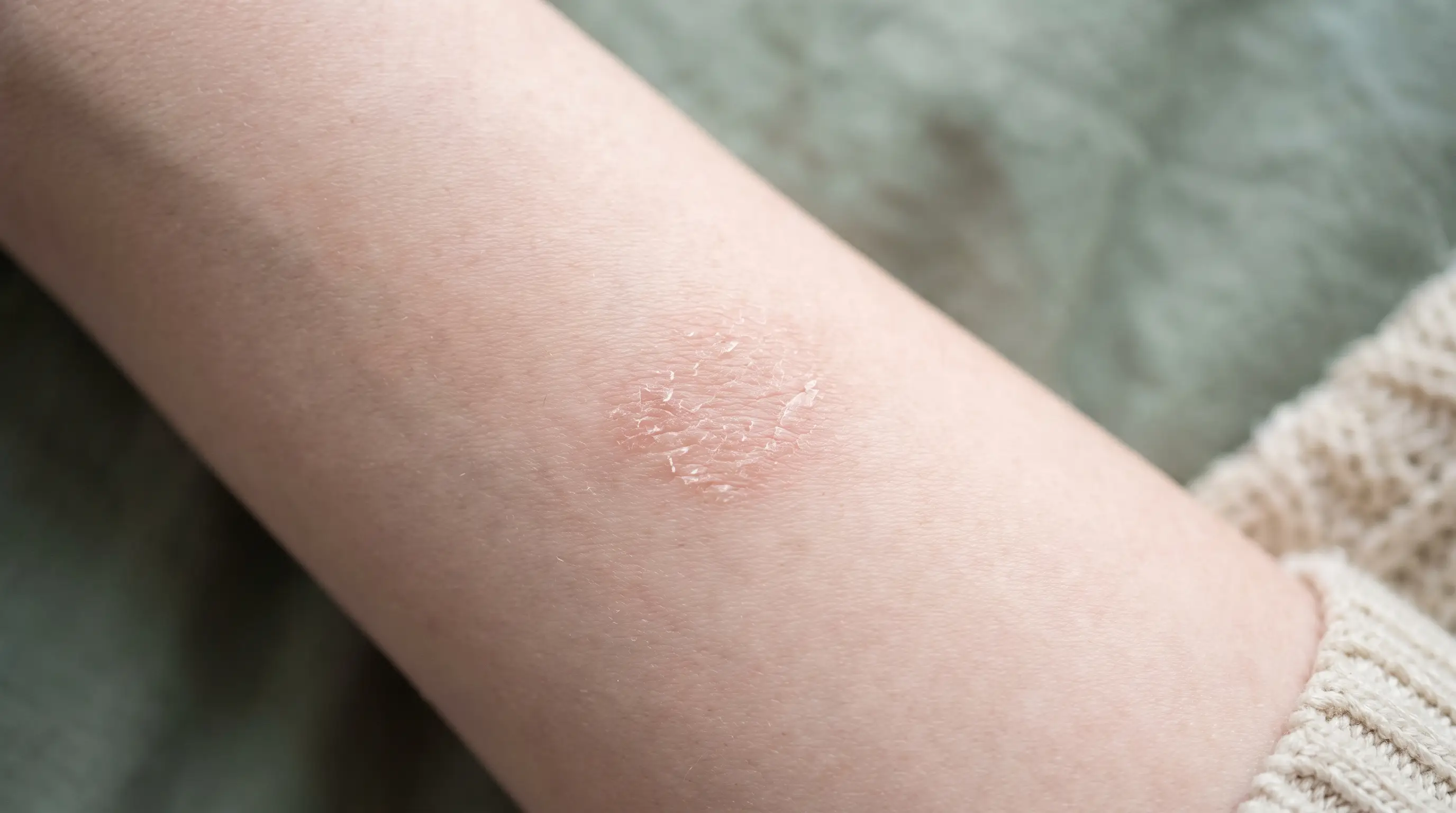
If your baby has broken skin, active irritation, eczema-prone skin, infection, or is under medical treatment for a skin condition, it is best to check with your pediatrician before using any new skincare product.
Yes, some families do use baby oil on newborn skin.
But the best approach is usually not to do more. It is to do less, carefully.
Choose a gentle formula.
Keep it fragrance-free if possible.
Start with a very small amount.
Patch test first.
And if anything feels uncertain, ask your pediatrician.
That is usually the calmest way forward.
Sometimes, yes. Some families use a small amount of gentle oil for massage or dry-feeling skin, but newborn skin is delicate, so it is best to start slowly.
Some parents use a small amount during the newborn stage, but less is usually better. Start only if needed, use a very small amount, and patch test first.
For many families, yes. Fragrance-free oil is often the simpler and gentler choice for newborn skin.
Possibly, but it depends on your baby’s skin. If the skin is very reactive, broken, or already being treated, check with your pediatrician first.
Apply a very small amount to one small area of clean, dry skin and wait 24 hours. Watch for redness, rash, bumps, or irritation.
Skinhug is made with baby and family skin in mind. For newborns, use a very small amount first, patch test, and ask your pediatrician if you are unsure or if your baby has skin concerns.

Now available on Shopee, Thaimart, Tiktok and LINE